


Organic chemicals are a vast and diverse group of compounds that play a crucial role in numerous industries, from pharmaceuticals and plastics to agriculture and cosmetics. As a leading supplier of organic chemicals, I often encounter questions about how these compounds are classified. Understanding the classification of organic chemicals is not only essential for scientists and researchers but also for businesses and consumers who rely on these substances in their daily lives. In this blog post, I will delve into the various methods of classifying organic chemicals and provide examples of some commonly used compounds in each category.
Classification Based on Carbon Skeleton
One of the fundamental ways to classify organic chemicals is based on their carbon skeleton. The carbon skeleton refers to the arrangement of carbon atoms in a molecule, which can vary in size, shape, and complexity. There are three main types of carbon skeletons: aliphatic, aromatic, and heterocyclic.

Aliphatic Compounds
Aliphatic compounds are organic chemicals that contain carbon atoms arranged in straight chains, branched chains, or non-aromatic rings. These compounds can be further divided into alkanes, alkenes, and alkynes based on the presence of single, double, or triple bonds between carbon atoms, respectively.
- Alkanes: Alkanes are saturated hydrocarbons that contain only single bonds between carbon atoms. They have the general formula CnH2n+2, where n is the number of carbon atoms in the molecule. Examples of alkanes include methane (CH4), ethane (C2H6), and propane (C3H8). Alkanes are commonly used as fuels and solvents.
- Alkenes: Alkenes are unsaturated hydrocarbons that contain at least one double bond between carbon atoms. They have the general formula CnH2n, where n is the number of carbon atoms in the molecule. Examples of alkenes include ethene (C2H4), propene (C3H6), and butene (C4H8). Alkenes are used in the production of plastics, synthetic rubber, and other industrial chemicals.
- Alkynes: Alkynes are unsaturated hydrocarbons that contain at least one triple bond between carbon atoms. They have the general formula CnH2n-2, where n is the number of carbon atoms in the molecule. Examples of alkynes include ethyne (C2H2), propyne (C3H4), and butyne (C4H6). Alkynes are used in the production of plastics, synthetic fibers, and other industrial chemicals.
Aromatic Compounds
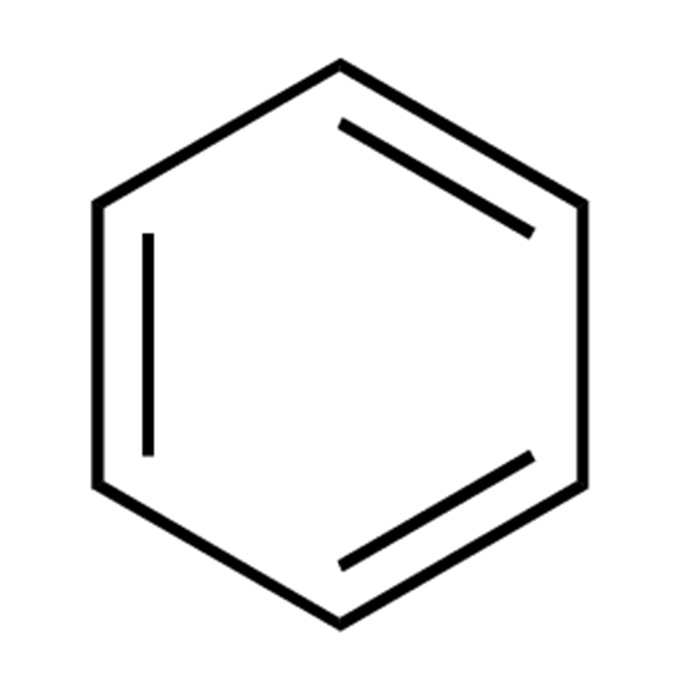
Aromatic compounds are organic chemicals that contain a benzene ring or a similar aromatic structure. Benzene is a six-carbon ring with alternating double bonds, which gives it unique stability and reactivity. Aromatic compounds have the general formula CnHn, where n is a multiple of six. Examples of aromatic compounds include Benzene CAS 71-43-2, toluene (C7H8), and xylene (C8H10). Aromatic compounds are widely used in the production of plastics, dyes, pharmaceuticals, and other industrial chemicals.
Heterocyclic Compounds
Heterocyclic compounds are organic chemicals that contain a ring structure with at least one atom other than carbon, such as nitrogen, oxygen, or sulfur. These compounds can be either aromatic or non-aromatic. Examples of heterocyclic compounds include pyridine (C5H5N), furan (C4H4O), and thiophene (C4H4S). Heterocyclic compounds are used in the production of pharmaceuticals, agrochemicals, and other industrial chemicals.
Classification Based on Functional Groups
Another important way to classify organic chemicals is based on their functional groups. Functional groups are specific groups of atoms within a molecule that determine its chemical properties and reactivity. There are many different types of functional groups, but some of the most common ones include alcohols, aldehydes, ketones, carboxylic acids, esters, and amines.
Alcohols
Alcohols are organic chemicals that contain a hydroxyl group (-OH) attached to a carbon atom. They have the general formula R-OH, where R is an alkyl or aryl group. Examples of alcohols include methanol (CH3OH), ethanol (C2H5OH), and propanol (C3H7OH). Alcohols are used in the production of solvents, fuels, and pharmaceuticals.
Aldehydes and Ketones
Aldehydes and ketones are organic chemicals that contain a carbonyl group (C=O). In aldehydes, the carbonyl group is located at the end of a carbon chain, while in ketones, it is located in the middle of a carbon chain. They have the general formula R-CHO for aldehydes and R-CO-R' for ketones, where R and R' are alkyl or aryl groups. Examples of aldehydes include formaldehyde (HCHO), acetaldehyde (CH3CHO), and benzaldehyde (C6H5CHO). Examples of ketones include acetone (CH3COCH3) and Methyl Isopropyl Ketone CAS 563-80-4. Aldehydes and ketones are used in the production of plastics, resins, and other industrial chemicals.
Carboxylic Acids
Carboxylic acids are organic chemicals that contain a carboxyl group (-COOH). They have the general formula R-COOH, where R is an alkyl or aryl group. Examples of carboxylic acids include acetic acid (CH3COOH), propionic acid (C2H5COOH), and benzoic acid (C6H5COOH). Carboxylic acids are used in the production of plastics, fibers, and other industrial chemicals.
Esters
Esters are organic chemicals that are formed by the reaction of a carboxylic acid with an alcohol. They have the general formula R-COO-R', where R and R' are alkyl or aryl groups. Examples of esters include ethyl acetate (CH3COOC2H5) and methyl benzoate (C6H5COOCH3). Esters are used in the production of fragrances, flavors, and plastics.
Amines
Amines are organic chemicals that contain a nitrogen atom bonded to one or more alkyl or aryl groups. They have the general formula R-NH2, R2NH, or R3N, where R is an alkyl or aryl group. Examples of amines include methylamine (CH3NH2), dimethylamine ((CH3)2NH), and trimethylamine ((CH3)3N). Amines are used in the production of pharmaceuticals, agrochemicals, and other industrial chemicals.
Classification Based on Natural and Synthetic Sources
Organic chemicals can also be classified based on their natural and synthetic sources. Natural organic chemicals are those that are derived from living organisms, such as plants, animals, and microorganisms. Synthetic organic chemicals are those that are produced through chemical synthesis in a laboratory or industrial setting.
Natural Organic Chemicals
Natural organic chemicals have been used by humans for thousands of years for various purposes, such as food, medicine, and clothing. Examples of natural organic chemicals include carbohydrates, lipids, proteins, and nucleic acids. These compounds are essential for life and play important roles in biological processes.
Synthetic Organic Chemicals
Synthetic organic chemicals have become increasingly important in modern society due to their wide range of applications. They are used in the production of plastics, synthetic fibers, pharmaceuticals, agrochemicals, and many other products. Examples of synthetic organic chemicals include Maleic Anhydride CAS 108-31-6, which is used in the production of unsaturated polyester resins, and benzene, which is used in the production of plastics, rubber, and other industrial chemicals.
Conclusion
In conclusion, organic chemicals can be classified in many different ways, including based on their carbon skeleton, functional groups, and natural and synthetic sources. Understanding the classification of organic chemicals is essential for scientists, researchers, and businesses who work with these substances. As a supplier of organic chemicals, I am committed to providing high-quality products and excellent customer service. If you are interested in purchasing organic chemicals for your business, please feel free to contact us to discuss your specific needs. We look forward to working with you to find the best solutions for your applications.
References
- Smith, J. G. (2017). Organic Chemistry. McGraw-Hill Education.
- Wade, L. G. (2017). Organic Chemistry. Pearson.
- McMurry, J. (2016). Organic Chemistry. Cengage Learning.