


Chemical Intermediate
What is Chemical Intermediate
Chemical intermediates are substances formed during a chemical reaction but are not final products; they are produced in one step of a multi-step reaction and consumed in subsequent steps. They play a vital role in the conversion of reactants into products.
Why Choose Us
High Quality Products
We always put customer needs and expectations in the first place, refine on, continuous improvement, to seek every opportunity to do better, to provide customers with their expectations of quality products, to provide customers with the most satisfactory service at anytime.
Quality Control
All goods will undergo strict quality inspection before shipment. MCC always insists on providing high-quality products. We firmly believe that quality is the basis of everything.
Advanced Equipment
We take great measures to ensure that we work with the industry’s highest quality equipment and that our equipment is regularly and meticulously maintained.
Professional Team
We have a team of skilled and experienced professionals who are well-versed in the latest technology and industry standards. Our team is dedicated to ensuring that our customers get the best service and support possible.
Competitive Prices
We offer our products at competitive prices, making them affordable for our customers. We believe that high-quality products should not come at a premium, and we strive to make our products accessible to all.
Rich Experience
Has a long-standing reputation in the industry, which makes it stand out from its competitors. With over many years of experience, they have developed the skills necessary to meet their clients' needs.


![4-[2-(Dimethylamino)ethyl]morpholine](/uploads/202339830/small/4-2-dimethylamino-ethyl-morpholineb1d61e56-3031-4e6c-a0f1-5667f06862fd.jpg?size=400x0)


Other Products Include
Ethylene Glycol Dicarboxylate
4-cyanobenzaldehyde
Di-n-hexylamine
What is Ethylene Glycol Dicarboxylate
Poly(ethylene glycol) dicarboxylate (PEGDC) contains carboxyl groups that increase the adhesive strength of the film to the tissue. [17,18] A lower molecular weight of PEGDC might improve the mechanical strength and physical properties of hydrogel film due to the higher physical cross-link density.
Synthesis of Ethylene Glycol and Terephthalic Acid from Biomass for Producing PET
There have been considerable efforts to produce renewable polymers from biomass. Poly(ethylene terephthalate) (PET) is one of the most versatile bulk materials used in our daily lives. Recent advances in the new catalytic process for conversion of biomass have allowed us to design more technically effective and cheaper methods for the synthesis of green PET monomers. This review analyses recent advances in the synthesis of PET monomers from biomass. Different routes for ethylene glycol (EG) and purified terephthalic acid (PTA) synthesis are systematically summarized. The advantages and drawbacks of each route are discussed in terms of feedstock, reaction pathway, catalyst, economic evaluation and technology status, trying to provide some state-of-the-art information on green PET monomer synthesis. Finally, an outlook is presented to highlight the challenges, opportunities and on-going trends, which may serve as guidelines for designing novel synthetic routes to green polymers from fundamental science to practical use.
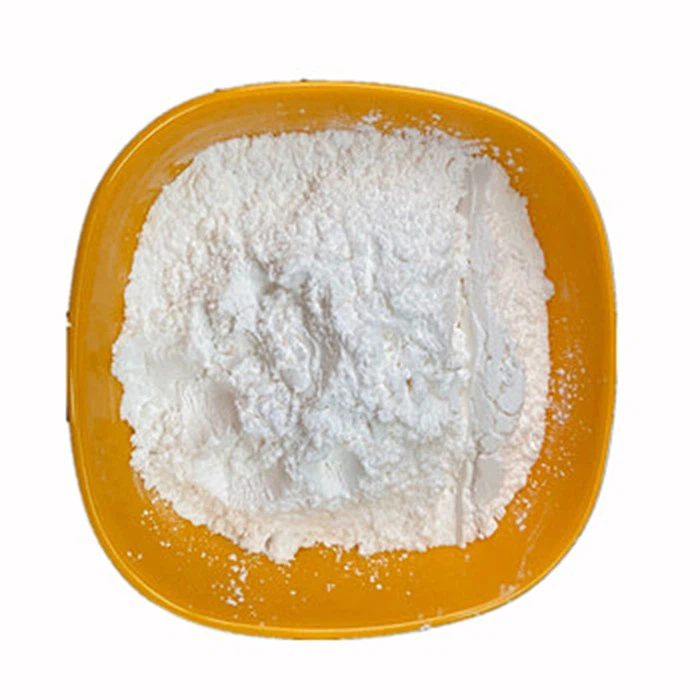
Physicochemical Properties of Ethylene Glycol
Ethylene glycol with the formula CH2OH2, also known as 1,2-ethanediol, is a popular organic compound. The safety data sheet for ethylene glycol, as well as for other substances, is the primary source of information on their physical and chemical properties. Ethylene glycol is the main component of antifreeze in HVAC and automotive systems. The formula of glycol clearly indicates that it belongs to a chemical group of dihydroxy alcohols, also known as diols. Thus, glycol as an alcohol is a colourless liquid with a high viscosity and a sweet taste. In addition to its excellent miscibility with water, it is also very soluble in aldehydes, ketones and acetic acid, but it does not dissolve at all in carbon tetrachloride. It is relatively cheap to produce. Its disadvantage is crystallisation at low temperatures and lower (compared to propylene glycol) ability to absorb heat (that is about 50% of the heat capacity of water).
Ethylene glycol has a high boiling point (197ᵒC) while having a low molecular weight. This is due to the strong association of molecules in the liquid phase, caused by the formation of hydrogen bonds. In its pure form, ethylene glycol freezes at about -13°C, while the ethylene glycol: water mixture can remain liquid at much lower temperatures. A mixture of 40% water and 60% glycol, for example, can withstand temperatures down to about -37ᵒC. It should be noted that ethylene glycol is miscible with water in all proportions. This is due to the presence of two hydroxyl groups in its structure.
The cross-linked poly(ethylene glycol) dicarboxylate (PEGDC)/poly(ethylene oxide) (PEO) and poly(ethylene glycol) dimethacrylate (PEGDMA)/(PEO) hydrogels were developed for possible biomedical applications such as an anti-adhesion barrier. Various contents of PEGDC/PEO film were irradiated using an electron beam with various beam intensities in order to obtain various degrees of crosslinked hydrogels. The optimum dose (300 kGy) and total crosslinker content of 10% were used to prepare crosslinked hydrogel films with three different compositions (10% PEGDC, 10% PEGDMA, 5% PEGDC–5% PEGDMA). Among them, 10% PEGDC hydrogel film exhibited the highest elongation at break (69.33 ± 6.87%) with high mechanical strength. 10% PEGDC hydrogel film showed the lowest hemolysis activity (6.03 ± 0.01%) and the highest tissue adherence (75.67 ± 1.15 cN). The result also indicated that the carboxyl groups in PEGDC affect the tissue adherence of hydrogel films via H-bonding interactions. In animal studies, 10% PEGDC anti-adhesion hydrogel film degraded within 3 weeks and demonstrated better anti-adhesive effect compared to Guardix-SG®.
What is 4-Cyanobenzaldehyde
4-Cyanobenzaldehyde, is used as an intermediate for organic synthesis.It is also used as an intermediate in the pharmaceutical and research department.

Method for Synthesizing 2-Methoxy-4-Cyano Benzaldehyde
The invention relates to a method for synthesizing 2-methoxy-4-cyano benzaldehyde which servers as an important medicinal intermediate. The method comprises the following steps: causing 3-methoxy-4-methyl benzoate to react with thionyl chloride react under the heating condition to generate 3-methoxy-4-methyl benzoyl chloride; causing the 3-methoxy-4-methyl benzoyl chloride to react with aqueous ammonia to generate 3-methoxy-4-methyl benzoyl amide; dehydrating the 3-methoxy-4-methyl benzoyl amide to generate 3-methoxy-4-methyl benzonitrile; brominating the 3-methoxy-4-methyl benzonitrile by N-bromosuccinimide (NBS) to generate 3-methoxy-4-benzylene bromide benzonitrile; and hydrolyzing the 3-methoxy-4-benzylene bromide benzonitrile to obtain the target product of 2-methoxy-4-cyano benzaldehyde. The method provided by the invention has the outstanding advantages that the reaction condition is mild, the reactions are rapid, the process is simple, and the operation is easy, thereby being suitable for industrial production.
Mushroom tyrosinase (EC 1.14.18.1), a copper containing oxidase, catalyzes both the hydroxylation of tyrosine into o-diphenols and the oxidation of o-diphenols into o-quinones. In the current study, the effects of 4-cyanobenzaldehyde and 4-cyanobenzoic acid on the monophenolase and diphenolase activities of mushroom tyrosinase have been studied. The results show that 4-cyanobenzaldehyde and 4-cyanobenzoic acid can inhibit both the monophenolase activity and the diphenolase activity of mushroom tyrosinase. The lag phase of tyrosine oxidation catalyzed by the enzyme was obviously lengthened, and the steady-state activity of the enzyme decreased sharply. 1.0 mM 4-cyanobenzaldehyde and 4-cyanobenzoic acid can lengthen the lag phase from 78 s to 134 and 115 s, respectively. Both 4-cyanobenzaldehyde and 4-cyanobenzoic acid can lead to reversible inhibition of the enzyme. The IC50 values of 4-cyanobenzaldehyde and 4-cyanobenzoic acid were estimated as 0.62 and 2.45 mM for monophenolase and as 0.72 and 1.40 mM for diphenolase, respectively. A kinetic analysis shows that 4-cyanobenzaldehyde and 4-cyanobenzoic acid are mixed-type inhibitors for the diphenolase. The apparent inhibition constants for 4-cyanobenzaldehyde and 4-cyanobenzoic acid binding with both the free enzyme and the enzyme–substrate complex have been determined and compared.
Production of 3-(Or 4-)cyanobenzaldehyde
PROBLEM TO BE SOLVED: To obtain the subject compound useful as an intermediate for medical and an agricultural chemicals from an easily available or reusable material in a high purity and a high yield by reacting 3- or 4-dichloromethylbenzonitrile with morpholine and then hydrolyzing the obtained product. SOLUTION: This method is to react (A) 3- or 4-dichloromethylbenzonitrile (e.g. the product obtained by chlorinating a side chain of m- or p-toluyl chloride, purifying the resulted 3- or 4-methylbenzoyl chloride by rectification, converting it by amidation with an aqueous ammonia to 3- or 4-dichloromethylbenzamide and then dehydrating it with thionyl chloride or acetic anhydride) with (B) morpholine to obtain 3- or 4-dimorphlinomethylbenzonitrile and then hydrolyze it.
4-Cyanobenzaldehyde Price
|
Manufacturer |
Product number |
Product description |
CAS number |
Packaging |
Price |
Updated |
Buy |
|
Sigma-Aldrich |
C89609 |
4-Formylbenzonitrile 95% |
105-07-7 |
1g |
$36.4 |
2024-03-01 |
Buy |
|
Sigma-Aldrich |
C89609 |
4-Formylbenzonitrile 95% |
105-07-7 |
5g |
$73.7 |
2024-03-01 |
Buy |
|
TCI Chemical |
C0443 |
4-Formylbenzonitrile >98.0%(GC) |
105-07-7 |
5g |
$17 |
2024-03-01 |
Buy |
|
TCI Chemical |
C0443 |
4-Formylbenzonitrile >98.0%(GC) |
105-07-7 |
25g |
$46 |
2024-03-01 |
Buy |
|
Alfa Aesar |
A14914 |
4-Cyanobenzaldehyde, 98+% |
105-07-7 |
5g |
$57.1 |
2024-03-01 |
Buy |

Dihexylamine is a clear colorless liquid. ( NTP, 1992) National Toxicology Program, Institute of Environmental Health Sciences, National Institutes of Health (NTP). 1992. National Toxicology Program Chemical Repository Database.
Di-N-Hexylamine Properties
|
Melting Point |
3 °C |
|
Boiling Point |
192-195 °C(lit.) |
|
Density |
0.795 g/mL at 25 °C(lit.) |
|
Vapor Density |
6.4 (vs air) |
|
Vapor Pressure |
0.05 hPa (20 °C) |
|
Refractive Index |
n20/D 1.432(lit.) |
|
Flash point |
203 °F |
|
Storage Temp. |
Store below +30°C. |
|
Solubility |
0.3g/l |
|
Pka |
pK1:11.0(+1) (25°C) |
|
Form |
Liquid |
|
Color |
Clear colorless |
|
PH |
9.9 (0.3g/l, H2O, 25℃) |
|
Explosive Limit |
0.7-5.9%(V) |
|
Water Solubility |
Miscible with water. |
|
Merck |
14,7650 |
|
BRN |
1738519 |
|
Stability |
Stable. Combustible. Incompatible with strong oxidizing agents. |
|
CAS DataBase Reference |
143-16-8(CAS DataBase Reference) |
|
EWG's Food Scores |
1 |
|
Fda Unii |
K37ADA14ZV |
|
EPA Substance Registry System |
Dihexylamine (143-16-8) |
The Effect of the Structure of N-Hexylamine on the Flotation of Quartz from an Artificial Mixture with Hematite
The effect of primary, secondary and tertiary hexylamines as collectors for the reverse flotation of quartz from an artificial mixture with hematite (1:1 by weight) was investigated by varying the pH and the collector concentration. The results show that di-n-hexylamine (di-HAA) was the most selective collector for the reverse flotation of fine quartz from hematite. The adsorption isotherms of di-HAA on quartz and hematite show much lower “saturation” values than those of mono-HAA on quartz and hematite. The adsorption densities of di-HAA on hematite are apparently too small to obtain the surface hydrophobicity that is necessary for flotation, even if the concentration is increased up to 1·10−3 mol l−1.
Di-n-hexylamine was originally used to synthesize pure SAPO-31 as a structure directing agent (SDA) and the synthesized SAPO-31 crystals have some novel features. After loaded with Pt, it exhibits higher selectivity to isomerization compared with the results of SAPO-31 prepared by the regular method.
Shanghai Yuze Chemical technology co.,ltd, found in 2017, which is headquartered in Pudong, Shanghai, China. We are an excellent supplier specializing in intermediates and fine chemicals etc., We regard product quality and credibility as the life of the enterprise. The management team has more than 10 years of experience in the industry and pays close attention to market dynamics. With a keen sense of market smell, we provide our customers the most professional services and cutting-edge products.

Certifications


FAQ
As one of the most professional chemical intermediate manufacturers and suppliers in China, we're featured by quality products and low price. Please rest assured to wholesale bulk chemical intermediate for sale here from our factory. Contact us for quotation.
Maleic anhydride, 2-Butanone, Inorganics