


Hey there! As a supplier of acetonitrile, I've seen firsthand how this versatile compound plays a crucial role in organic synthesis. In this blog post, I'm gonna break down the reaction mechanisms of acetonitrile and show you why it's such a big deal in the world of chemistry.
General Overview of Acetonitrile
Acetonitrile, also known as methyl cyanide, has the chemical formula CH₃CN. It's a colorless liquid with a sweet, ether - like odor. One of the reasons it's so popular in organic synthesis is its high polarity and relatively low boiling point (around 81.6 °C). This makes it a great solvent for a wide range of reactions.
Reaction Mechanisms
Nucleophilic Substitution Reactions
Acetonitrile can act as a solvent and sometimes even as a reactant in nucleophilic substitution reactions. For example, in SN1 reactions, the polar nature of acetonitrile helps in stabilizing the carbocation intermediate. When a substrate with a good leaving group, like an alkyl halide, is dissolved in acetonitrile, the solvent molecules surround the carbocation formed after the leaving group departs. This stabilization makes the reaction more favorable.
Let's say we have an alkyl bromide (R - Br). In the presence of a nucleophile (Nu⁻) and acetonitrile as the solvent, the reaction proceeds as follows:
- The alkyl bromide dissociates to form a carbocation (R⁺) and a bromide ion (Br⁻). The acetonitrile molecules solvate the carbocation through dipole - dipole interactions.
- The nucleophile then attacks the carbocation to form the substitution product (R - Nu).
Acetonitrile can also participate in SN2 reactions. Although it's not the main reactant in the classic sense, its properties can influence the rate and outcome of the reaction. The polar aprotic nature of acetonitrile means it doesn't solvate anions strongly. This allows the nucleophile to be more reactive, as it's not surrounded by a shell of solvent molecules that would otherwise hinder its attack on the substrate.
Addition Reactions
Acetonitrile can undergo addition reactions under certain conditions. One well - known reaction is the addition of Grignard reagents. When a Grignard reagent (RMgX) reacts with acetonitrile, an imine intermediate is formed.
The reaction mechanism involves the nucleophilic attack of the carbanion part of the Grignard reagent on the carbon atom of the nitrile group in acetonitrile. This forms an intermediate with a negative charge on the nitrogen atom.
Subsequent hydrolysis of this intermediate leads to the formation of a ketone. The general reaction can be summarized as:
CH₃CN + RMgX → R - C(=NH)CH₃ (after reaction with Grignard reagent)
R - C(=NH)CH₃ + H₂O → R - CO - CH₃ + NH₃ (after hydrolysis)
Oxidation Reactions
In some oxidation reactions, acetonitrile can be used as a solvent. For example, in the oxidation of alcohols to aldehydes or ketones using oxidizing agents like pyridinium chlorochromate (PCC), acetonitrile can help in dissolving both the substrate (alcohol) and the oxidizing agent.
The oxidation reaction occurs when the alcohol donates electrons to the oxidizing agent. Acetonitrile's role here is to provide a suitable environment for the reaction to take place. It can also help in separating the products from the reaction mixture due to its solubility properties.
Role in Transition Metal - Catalyzed Reactions
Acetonitrile is often used as a ligand in transition metal - catalyzed reactions. Many transition metal complexes can coordinate with acetonitrile molecules through the lone pair of electrons on the nitrogen atom of the nitrile group.
For example, in palladium - catalyzed cross - coupling reactions, acetonitrile can be part of the reaction mixture. The palladium complex with acetonitrile ligands can activate the substrates and facilitate the coupling reaction. The coordination of acetonitrile to the metal center can influence the electronic and steric properties of the complex, which in turn affects the reaction rate and selectivity.
Comparison with Other Solvents
When compared to other common solvents in organic synthesis, acetonitrile has some unique advantages. For instance, compared to Toluene CAS 108 - 88 - 3, which is a non - polar solvent, acetonitrile's polarity makes it more suitable for reactions involving charged species. Toluene is great for reactions where non - polar substrates are involved, but it lacks the ability to solvate ions effectively.
On the other hand, Phthalic Anhydride CAS 85 - 44 - 9 is a solid compound used in different types of reactions, mainly in the synthesis of phthalate esters and other organic compounds. Acetonitrile, being a liquid solvent, has a different set of applications in solution - based reactions.
Ortho - xylene CAS 95 - 47 - 6 is another non - polar aromatic solvent. It's used in applications where a non - polar environment is required, such as in some extraction processes. Acetonitrile, with its polar aprotic nature, offers a different reaction environment and can be used in reactions where ortho - xylene would not be suitable.
Applications in Industrial Organic Synthesis
Acetonitrile is widely used in the pharmaceutical, agrochemical, and polymer industries. In the pharmaceutical industry, it's used in the synthesis of various drugs. Many drug molecules are synthesized through a series of nucleophilic substitution, addition, and oxidation reactions, where acetonitrile plays a key role as a solvent or reactant.
In the agrochemical industry, the synthesis of pesticides and herbicides often involves reactions that require the use of acetonitrile. Its ability to dissolve a wide range of organic compounds and its influence on reaction mechanisms make it an essential component in these processes.
Conclusion
As you can see, acetonitrile is a super important compound in organic synthesis. Its unique reaction mechanisms and properties make it a go - to solvent and sometimes a reactant in many types of reactions. Whether it's stabilizing intermediates in nucleophilic substitution reactions, participating in addition reactions with Grignard reagents, or acting as a ligand in transition metal - catalyzed reactions, acetonitrile has a lot to offer.
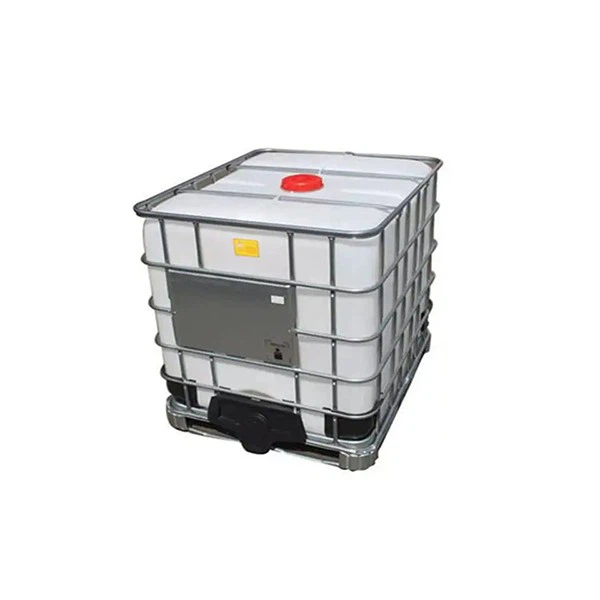
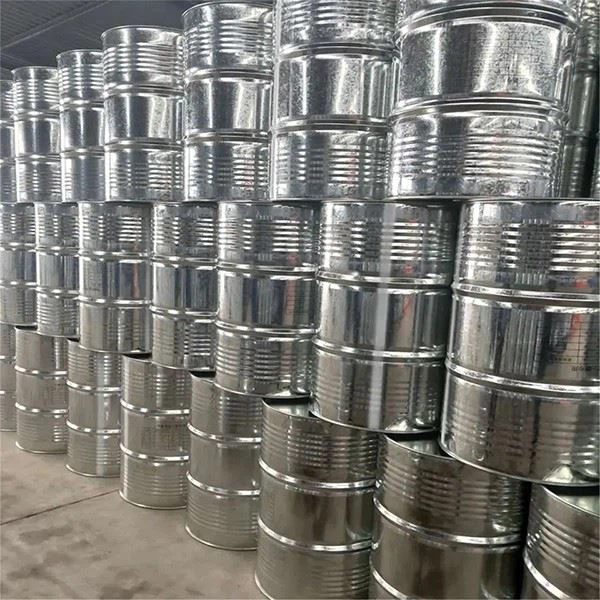
If you're involved in organic synthesis and are looking for a reliable source of high - quality acetonitrile, we're here to help. We understand the importance of having a consistent and pure supply of this compound for your reactions. Whether you need a small quantity for research purposes or a large - scale supply for industrial production, we've got you covered. Reach out to us to discuss your procurement needs and let's start a great partnership in the world of organic synthesis.
References
- March, J. "Advanced Organic Chemistry: Reactions, Mechanisms, and Structure." John Wiley & Sons, Inc., 2007.
- Carey, F. A., & Sundberg, R. J. "Advanced Organic Chemistry Part A: Structure and Mechanisms." Springer, 2007.
- Clayden, J., Greeves, N., Warren, S., & Wothers, P. "Organic Chemistry." Oxford University Press, 2012.