


Hey there! As a supplier of N,N'-DI-TERT-BUTYLETHYLENEDIAMINE, I often get asked about its mass spectrum. So, I thought I'd write this blog to share some insights on that topic.
First off, let's talk a bit about N,N'-DI-TERT-BUTYLETHYLENEDIAMINE. It's a pretty useful chemical compound. Chemically, it has a structure with two tert - butyl groups attached to the nitrogen atoms of an ethylenediamine backbone. This structure gives it some unique properties and makes it valuable in various chemical reactions and applications.
Now, onto the mass spectrum. The mass spectrum of a compound is like a fingerprint that can tell us a lot about its molecular structure and composition. When we analyze the mass spectrum of N,N'-DI-TERT-BUTYLETHYLENEDIAMINE, we're essentially looking at how the compound breaks apart into smaller fragments when it's ionized in a mass spectrometer.
The molecular formula of N,N'-DI-TERT-BUTYLETHYLENEDIAMINE is C₁₀H₂₄N₂. Its molecular weight is approximately 172.31 g/mol. In the mass spectrum, we'd expect to see a peak at or around m/z = 172, which corresponds to the molecular ion (M⁺). This peak represents the intact molecule that has lost one electron to become a positively charged ion.

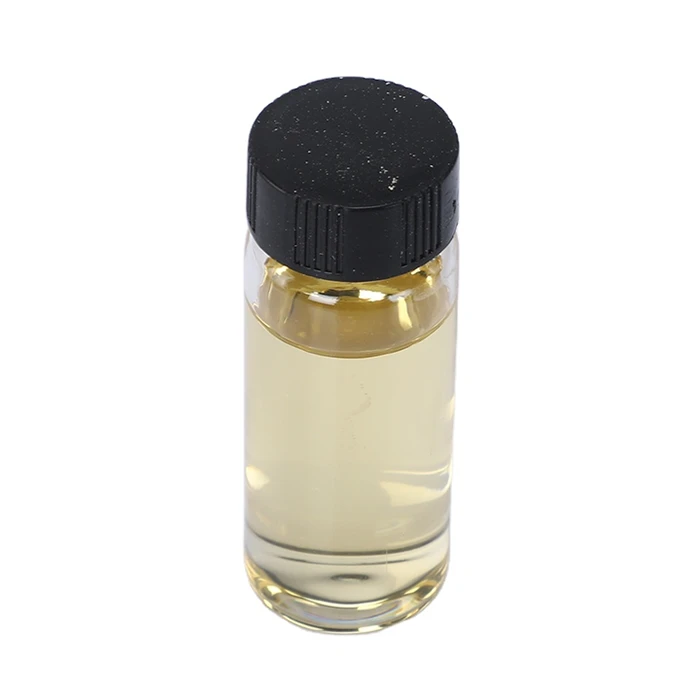
But the mass spectrum isn't just about the molecular ion peak. As the molecule gets fragmented in the mass spectrometer, we'll see other peaks corresponding to different fragments. For example, the tert - butyl groups can break off from the main structure. A tert - butyl group has a molecular weight of about 57 g/mol. So, we might see peaks at m/z values that result from the loss of one or both tert - butyl groups from the molecular ion.
If one tert - butyl group breaks off, we'd expect a peak at m/z = 172 - 57 = 115. This fragment represents the remaining part of the molecule after losing one tert - butyl group. And if both tert - butyl groups break off, we'd get a fragment with a structure related to just the ethylenediamine part, and the m/z value would be much lower.
Another important aspect of the mass spectrum is the relative abundance of these peaks. The height or intensity of each peak tells us how likely that particular fragmentation is to occur. The molecular ion peak might not always be the most intense one. Sometimes, the fragmentation patterns are such that certain fragments are more stable and thus more likely to form, resulting in higher - intensity peaks for those fragments.
The fragmentation of N,N'-DI-TERT-BUTYLETHYLENEDIAMINE can also be influenced by the ionization method used in the mass spectrometer. Different ionization techniques, like electron ionization (EI) or electrospray ionization (ESI), can lead to different fragmentation patterns. EI is a more energetic method that often causes more extensive fragmentation, while ESI is a softer ionization technique that can sometimes preserve the intact molecular ion better.
Now, I know some of you might be wondering why all this matters. Well, understanding the mass spectrum of N,N'-DI-TERT-BUTYLETHYLENEDIAMINE is crucial for several reasons. In a research setting, it helps chemists confirm the identity of the compound. If they synthesize a compound that they think is N,N'-DI-TERT-BUTYLETHYLENEDIAMINE, comparing its mass spectrum with the expected one can tell them if they've actually made the right compound.
In quality control, the mass spectrum can be used to check the purity of the compound. Impurities in the sample will have their own unique mass spectra, and any unexpected peaks in the spectrum of N,N'-DI-TERT-BUTYLETHYLENEDIAMINE can indicate the presence of impurities.
As a supplier, I make sure that the N,N'-DI-TERT-BUTYLETHYLENEDIAMINE we offer meets high - quality standards. We use advanced analytical techniques, including mass spectrometry, to ensure the purity and identity of our product.
If you're in the market for other related chemical compounds, we also have some great options. For example, we supply 4'-Methylpropiophenone CAS 5337-93-9, 5-Bromo-2-methylpyridine, and 1-naphthaleneboronic Acid. These compounds are also widely used in various chemical and pharmaceutical applications.
Whether you're a researcher working on a new chemical synthesis or a manufacturer looking for high - quality raw materials, having a good understanding of the mass spectrum of the compounds you're using is essential. It can save you a lot of time and effort in the long run by helping you avoid mistakes and ensure the quality of your products.
If you're interested in purchasing N,N'-DI-TERT-BUTYLETHYLENEDIAMINE or any of the other compounds I mentioned, feel free to reach out for a quote and start a procurement discussion. We're always happy to work with you to meet your chemical needs.
References
- Silverstein, R. M., Webster, F. X., & Kiemle, D. J. (2014). Spectrometric Identification of Organic Compounds. Wiley.
- McLafferty, F. W., & Tureček, F. (1993). Interpretation of Mass Spectra. University Science Books.