


Chromatography is a powerful separation technique widely used in various fields, including chemistry, biology, and pharmaceuticals. Among the many solvents employed in chromatography, acetonitrile plays a crucial and versatile role. As a trusted acetonitrile supplier, I am excited to delve into the significance of acetonitrile in chromatography and explore its various applications.
1. Acetonitrile as a Mobile Phase Solvent
In liquid chromatography (LC), the mobile phase is a crucial component that carries the sample through the stationary phase for separation. Acetonitrile is one of the most commonly used solvents in the mobile phase due to its excellent properties.
1.1 Polarity and Solubility
Acetonitrile is a polar aprotic solvent, which means it has a relatively high dielectric constant but does not have an acidic hydrogen atom. This property allows it to dissolve a wide range of polar and non - polar compounds. In reversed - phase liquid chromatography (RPLC), which is the most widely used LC mode, the stationary phase is non - polar (e.g., C18), and the mobile phase is a mixture of water and an organic solvent such as acetonitrile. The polarity of acetonitrile can be adjusted by varying its ratio with water, enabling the separation of compounds with different polarities. For example, more polar compounds will elute faster in a mobile phase with a higher water content, while less polar compounds will require a higher proportion of acetonitrile for elution.
1.2 Low UV Absorbance
Acetonitrile has low ultraviolet (UV) absorbance in the range commonly used for detection in LC (e.g., 200 - 400 nm). This makes it an ideal solvent for UV - based detection methods, such as UV - Visible spectroscopy. Low UV absorbance reduces background noise and improves the sensitivity of the detection system, allowing for the accurate quantification of analytes even at low concentrations.
1.3 Viscosity and Column Efficiency
Compared to some other organic solvents, acetonitrile has relatively low viscosity. Low viscosity is beneficial in chromatography because it reduces the pressure drop across the column, allowing for higher flow rates without excessive backpressure. This, in turn, can lead to shorter analysis times and improved column efficiency. Higher column efficiency means better separation of peaks, which is crucial for accurate identification and quantification of analytes.
2. Acetonitrile in Gradient Elution
Gradient elution is a technique commonly used in LC to improve the separation of complex mixtures. In gradient elution, the composition of the mobile phase is changed continuously or step - wise during the analysis. Acetonitrile is often used in gradient elution because of its ability to provide a wide range of elution strengths.
2.1 Separation of Complex Mixtures
Complex mixtures, such as biological samples or environmental samples, often contain compounds with a wide range of polarities. By using a gradient of acetonitrile in the mobile phase, it is possible to elute both polar and non - polar compounds from the column in a single analysis. For example, in the analysis of a mixture of peptides, a gradient starting with a high water content (low acetonitrile) can be used to elute the more polar peptides first. As the acetonitrile concentration increases during the gradient, the less polar peptides will be eluted, resulting in a better separation of the entire mixture.
2.2 Peak Resolution and Sensitivity
Gradient elution with acetonitrile can significantly improve peak resolution. Compounds that would co - elute in an isocratic (constant mobile phase composition) system can be separated by using a gradient. This is especially important when analyzing samples with closely related compounds. Additionally, gradient elution can enhance the sensitivity of the analysis by concentrating the analytes in the column during the initial low - strength mobile phase and then rapidly eluting them with a stronger mobile phase, resulting in sharper peaks.
3. Acetonitrile in Mass Spectrometry Coupled with Chromatography
The combination of chromatography and mass spectrometry (LC - MS) is a powerful analytical technique that provides both separation and identification capabilities. Acetonitrile is widely used in LC - MS due to its compatibility with mass spectrometric detection.
3.1 Volatility and Ionization
Acetonitrile is a volatile solvent, which is essential for the interface between the LC and the MS. In electrospray ionization (ESI), one of the most commonly used ionization methods in LC - MS, the mobile phase is sprayed into a high - voltage field to generate charged droplets. The volatility of acetonitrile helps in the rapid evaporation of the solvent from the droplets, facilitating the formation of gas - phase ions. Moreover, acetonitrile can enhance the ionization efficiency of analytes in ESI, leading to better sensitivity and more accurate mass determination.
3.2 Compatibility with MS Detectors
Acetonitrile is compatible with various types of MS detectors, including quadrupole, time - of - flight (TOF), and ion trap detectors. It does not cause significant contamination or interference in the MS system, allowing for reliable and reproducible analysis. This compatibility makes acetonitrile an indispensable solvent in LC - MS applications, such as proteomics, metabolomics, and drug discovery.
4. Acetonitrile in Other Chromatographic Techniques
In addition to LC and LC - MS, acetonitrile also finds applications in other chromatographic techniques.
4.1 Supercritical Fluid Chromatography (SFC)
In SFC, carbon dioxide is often used as the mobile phase, and a modifier such as acetonitrile is added to increase the solubility of polar analytes. Acetonitrile can improve the separation efficiency and selectivity in SFC, especially for compounds that are difficult to separate using pure carbon dioxide.
4.2 Thin - Layer Chromatography (TLC)
Although less common than in LC, acetonitrile can also be used as a component of the developing solvent in TLC. It can be mixed with other solvents to create a suitable mobile phase for the separation of compounds on a thin - layer plate. The choice of acetonitrile in TLC depends on the polarity of the analytes and the stationary phase used.
5. Importance of High - Quality Acetonitrile
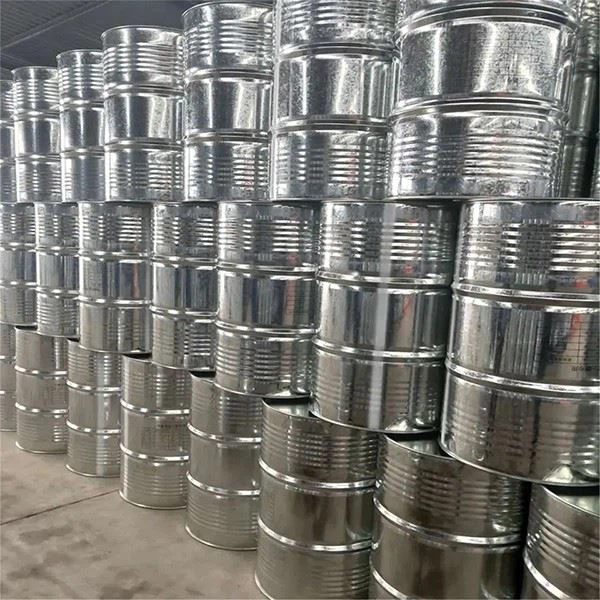
As an acetonitrile supplier, I understand the importance of providing high - quality acetonitrile for chromatography applications. Impurities in acetonitrile can have a significant impact on the performance of the chromatographic system.
5.1 Purity and Contamination
High - purity acetonitrile is required to ensure accurate and reproducible results. Impurities such as metal ions, organic contaminants, and particulate matter can cause problems in chromatography. Metal ions can interact with analytes or the stationary phase, leading to peak tailing or loss of column efficiency. Organic contaminants can interfere with the detection of analytes, especially in UV - based detection. Particulate matter can clog the column and the tubing, reducing the flow rate and causing pressure fluctuations.

5.2 Consistency
Consistency in the quality of acetonitrile is also crucial. Batch - to - batch variations in the purity, polarity, or other properties of acetonitrile can lead to inconsistent chromatographic results. As a supplier, we ensure strict quality control measures to maintain the consistency of our acetonitrile products, so that our customers can rely on the same performance every time they use our acetonitrile.
6. Related Chemicals in Chromatography
In addition to acetonitrile, there are other chemicals that are commonly used in chromatography. For example, Acrylic Acid CAS 79 - 10 - 7 can be used in the synthesis of stationary phases for chromatography. Its reactive double bond allows for the modification of the stationary phase surface, which can improve the separation selectivity. STYRENE CAS 100 - 42 - 5 is another important chemical in chromatography. It can be polymerized to form porous polymers that are used as stationary phases in some types of chromatography, such as size - exclusion chromatography. Ortho - xylene CAS 95 - 47 - 6 can be used as a solvent or a component of the mobile phase in certain chromatographic applications, especially when dealing with non - polar compounds.
7. Contact for Procurement
If you are in need of high - quality acetonitrile for your chromatography applications or have any questions about our products, please feel free to contact us. We are committed to providing you with the best products and services to meet your analytical needs. Whether you are a research laboratory, a pharmaceutical company, or an environmental testing facility, we have the right acetonitrile solution for you.
References
- Snyder, L. R., Kirkland, J. J., & Glajch, J. L. (2010). Practical HPLC method development. John Wiley & Sons.
- McMaster, M. C. (2005). HPLC for Pharmaceutical Scientists. John Wiley & Sons.
- Li, S., & Smith, R. D. (2002). LC - MS in bioanalysis. Journal of Chromatography B, 777(1 - 2), 201 - 224.