


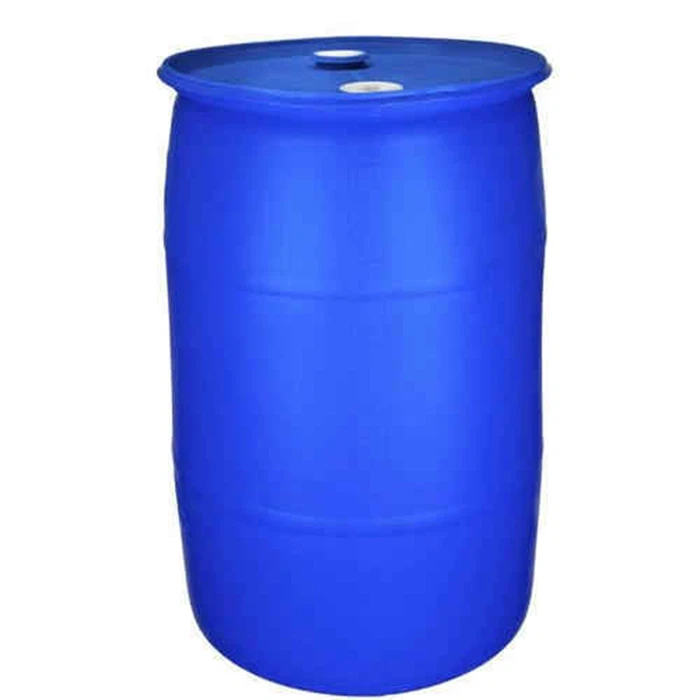
What is Tetrahydrofuran CAS 109-99-9
Tetrahydrofuran (THF), or oxolane, is an organic compound with the formula (CH2)4O. The compound is classified as heterocyclic compound, specifically a cyclic ether. It is a colorless, water-miscible organic liquid with low viscosity. It is mainly used as a precursor to polymers.
Benefits of Tetrahydrofuran CAS 109-99-9
Low Viscosity
Tetrahydrofuran has a low viscosity and is a very fluid liquid. Compared with other solvents, it diffuses faster in the reaction mixture, speeding up the reaction rate and increasing the reaction yield. Therefore, tetrahydrofuran is often used as a solvent and plays an important role in organic reactions with high activity.
Low Volatility
Tetrahydrofuran is a less volatile solvent. Its volatility is much lower than that of ordinary organic hydrogen compounds, and it is difficult to volatilize even at high temperatures. This low volatility allows THF to be used under general laboratory conditions, while also reducing the risk of solvent residue and ensuring the reliability and accuracy of experiments.
High Dielectric Constant
Tetrahydrofuran has a relatively high dielectric constant and is a polar solvent. Its molecules are highly polar and have strong polar bonds and hydrogen bonds, and can effectively dissolve polar molecules and compounds involved in hydrogen bond formation. Tetrahydrofuran has a wide range of applications in the fields of biochemistry, electrochemistry and materials science.
Wide Application
Because tetrahydrofuran has the characteristics of low viscosity, low volatility and high dielectric constant, it is possible to use it as a selective solvent in active organic reactions. At the same time, tetrahydrofuran is also widely used in the fields of chemistry, medicine, biology and materials. It can be used as a solvent for synthetic drugs and natural products, for the synthesis of anti-cancer, anti-viral and antibacterial drugs; it can also be used for the synthesis of conductive polymers, battery materials, photonic crystals and other high-tech materials.


Why Choose Us
High Quality Products
We always put customer needs and expectations in the first place, refine on, continuous improvement, to seek every opportunity to do better, to provide customers with their expectations of quality products, to provide customers with the most satisfactory service at anytime.
Quality Control
All goods will undergo strict quality inspection before shipment. MCC always insists on providing high-quality products. We firmly believe that quality is the basis of everything.
Advanced Equipment
We take great measures to ensure that we work with the industry's highest quality equipment and that our equipment is regularly and meticulously maintained.
Professional Team
We have a team of skilled and experienced professionals who are well-versed in the latest technology and industry standards. Our team is dedicated to ensuring that our customers get the best service and support possible.
Competitive Prices
We offer our products at competitive prices, making them affordable for our customers. We believe that high-quality products should not come at a premium, and we strive to make our products accessible to all.
Rich Experience
Has a long-standing reputation in the industry, which makes it stand out from its competitors. With over many years of experience, they have developed the skills necessary to meet their clients' needs.
Tetrahydrofuran Chemical Formula Structure
The chemical formula structure of tetrahydrofuran is an oxygen atom connected to a ring composed of four carbon atoms. Each carbon atom is connected to a hydrogen atom. Its molecular formula is C4H8O, which can also be written as (CH2)4O. Tetrahydrofuran is a heterocyclic organic compound, which belongs to the ethers and is the complete hydrogenation product of furan. This compound is a colorless and transparent liquid with an ether-like smell. It is soluble in water, ethanol, ether, acetone, benzene, etc. It is mainly used as a solvent, chemical synthesis intermediate, and analytical reagent. It should be noted that on October 27, 2017, in the list of carcinogens published by the World Health Organization' s International Agency for Research on Cancer, tetrahydrofuran was listed as a Category 2B carcinogen.
Tetrahydrofuran plays an important role in the pharmaceutical field, and its wide range of applications makes it a solvent of great interest. This article will introduce the specific applications of tetrahydrofuran in drugs, including its solubility characteristics, reaction media, and impact on drug synthesis and formulation processes.
Tetrahydrofuran is a polar solvent with good solubility properties and can dissolve a variety of compounds, including hydrophobic and polar compounds. This makes it a commonly used reaction medium and solvent of choice in drug synthesis.
Tetrahydrofuran is of great significance in drug synthesis. It can be used as a reaction medium to promote chemical reactions and improve product purity and yield. At the same time, tetrahydrofuran can also be used as a solvent to dissolve and transfer reactants during drug synthesis. Its polar characteristics enable it to effectively promote the dissolution and diffusion of reactants, thereby improving reaction efficiency.
Tetrahydrofuran also has an important impact on the preparation process. In the development and production of pharmaceutical preparations, tetrahydrofuran is often used to dissolve pharmaceutical raw materials and excipients for subsequent mixing, granulation, and packaging. Its solubility and polarity properties make it an ideal solvent choice for pharmaceutical manufacturing processes.
As an important solvent, tetrahydrofuran plays an invisible heroic role in the field of medicine. It plays an important role in drug synthesis and formulation through its solubility properties and reaction medium properties. In the future, with the continuous development of pharmaceutical technology, the application prospects of tetrahydrofuran will be broader, providing more possibilities for drug development and production.
What Is Tetrahydrofuran Used For
Organic Synthesis
THF is a commonly used organic synthesis solvent and is widely used in many organic synthesis reactions, such as Grignard reaction, metal catalyzed reaction, esterification reaction, etc. It is able to dissolve many organic compounds, making them easier to react with.
Polymerization Reaction
THF can be used as a reaction solvent for some polymerization reactions, especially in the process of synthesizing polymer materials such as polyurethane and polyacrylate.
Dissolution Of Metal Ion Complexes
Because THF has good solubility for many metal ion complexes, it is widely used to synthesize metal organic compounds or perform organometallic chemical reactions.
Solvent Extraction
THF can be used in chemical separation and extraction processes, such as for extracting natural products, separating compounds in mixtures, etc.
Polymer Dissolution
THF is a solvent with strong solubility and can be used to dissolve and process some high molecular polymers, such as polyacrylate and polycaprolactone.

Tetrahydrofuran is one of the most polar ethers. It is used as a medium polar solvent in chemical reactions and extractions. It is a colorless and volatile liquid at room temperature, with an ether-like smell. Soluble in most organic solvents such as water, ethanol, ether, acetone, and benzene, it is called a "universal solvent". It is partially miscible with water at room temperature. Some unscrupulous reagent dealers take advantage of this fact to make huge profits by mixing tetrahydrofuran reagent with water.
Oxidation Method of Tetrahydrofuran
Oxidation reaction with hydrogen peroxide
The oxidation reaction of tetrahydrofuran using hydrogen peroxide is a common method, and the reaction conditions are usually carried out at room temperature. In this reaction, hydrogen peroxide can be promoted by a catalyst, making the oxidation reaction more likely to occur. Different catalysts affect reaction rate and selectivity. Common catalysts include transition metal ions and alkali metal ions.
Using hydrogen peroxide and copper acetate as catalysts, tetrahydrofuran can be oxidized to tetrahydrofuran-1,4-dione. The reaction mechanism is mainly through the decomposition of hydrogen peroxide by a catalyst to generate hydroxyl radicals, which then attack the double bonds of tetrahydrofuran and finally form tetrahydrofuran-1,4-dione.
Use phosphorus trichloride peroxide for oxidation reaction
In addition to hydrogen peroxide, phosphorus trichloride peroxide can also be used in the oxidation reaction of tetrahydrofuran. This method has advantages in both reaction rate and selectivity, and is also widely used in organic synthesis.
Phosphorus peroxide trichloride is commonly used as hydrogen peroxide with various properties. It can initiate free radical reactions and oxidize tetrahydrofuran. During the reaction, phosphorus trichloride peroxide decomposes into phosphorus trichloride and oxygen. Oxygen and tetrahydrofuran react to form the target product.
How Is Tetrahydrofuran Produced Industrially
Tetrahydrofuran (THF), referred to as THF, has a molecular formula of C4H8O, a boiling point of 66°C, a specific gravity of D20 40.886~0.888, and a refractive index n20 of D1.4060~1.4080. Due to its fast dissolution speed, good diffusion performance, good fluidity, low toxicity, and low boiling point, it has good dissolving properties for both organic and inorganic substances. Known as the "universal solvent", it can be used for resins, polyethers, etc. Used as solvent in rubber and polyurethane synthesis. In pharmaceutical engineering, it is the basic raw material for the synthesis of Kebiqing, rifamycin, progesterone, prednisone, Naofukang, etc. Tetrahydrofuran can also be used to produce tetramethylene glycol ether (PTMEG), adipic acid, butylene glycol, dichlorobutane, tetrahydrothiophene, butyrolactone, pyrrolidone, 2.3-dichlorotetrahydrofuran and other chemical products. THF can also be used as acetylene extraction solvent, tape cleaning agent, synthetic leather surface coating agent, polymer material light stabilizer, etc. At present, the world's THF production capacity is about 500,000 tons, which is mainly used to synthesize polytetramethylene alcohol ether (PTMEG) and used as a solvent. Due to different national conditions in various countries, the consumption distribution of THF is also different.
Tetrahydrofuran Storage Conditions
Tetrahydrofuran is a flammable liquid, and its storage temperature should be controlled at or below room temperature, preferably not higher than 30 degrees Celsius. Excessively high temperatures can easily decompose tetrahydrofuran, producing harmful gases and precipitates, which can lead to explosions in severe cases.
Tetrahydrofuran should be stored in a dark, dry place away from direct sunlight. Ultraviolet rays in sunlight will destroy the molecular structure of THF, causing it to produce harmful oxidation products, affecting its chemical properties and solubility.
Tetrahydrofuran has strong volatility and peculiar smell. It should be stored in a well-ventilated place to avoid mixing with other items and polluting the environment. When using tetrahydrofuran, a chemical fume hood or supporting ventilation equipment should be used to prevent harmful gases from causing damage to the human body.
Tetrahydrofuran should be stored in glass bottles or plastic bottles with good airtight performance. Avoid using metal or plastic transparent containers. Metal containers are easily corroded by the oxidation of tetrahydrofuran to produce harmful gases, and plastic transparent containers are easily affected by ultraviolet rays and produce harmful oxidation products.
Effect of Tetrahydrofuran on Enzyme Activities in Activated Sludge
Tetrahydrofuran is an important solvent widely used in industrial and laboratory research work. However, little is known about the effects and fate of tetrahydrofuran (THF) in the environment. Some attempts to enrich microorganisms in activated sludge to degrade THF have failed. The effect of THF on the activities of dehydrogenase, protease, phosphatase, urease and catalase in activated sludge was studied. The activated sludge was taken from the secondary sedimentation tank of Sibao Wastewater Treatment Plant in Hangzhou, China, and the changes in enzyme activity in the presence of tetrahydrofuran were observed. The results showed that within the selected concentration range, tetrahydrofuran completely inhibited dehydrogenase activity during culture, on the contrary, did not inhibit protease activity, and strongly affected phosphatase, urease and catalase activities, and with increasing tetrahydrofuran concentration , phosphatase, urease and catalase activities decreased. . Calculate the EC10, EC50 and EC90 of tetrahydrofuran on the phosphatase, urease and catalase activities based on the equations obtained from the dose-response curve regression model. Understanding the impact of THF on enzyme diversity in activated sludge can help us understand the impact and fate of THF in the environment, and help us enrich THF degradation pure isolates or activated sludge.
Shanghai Yuze Chemical technology co.,ltd, found in 2017, which is headquartered in Pudong, Shanghai, China. We are an excellent supplier specializing in intermediates and fine chemicals etc., We regard product quality and credibility as the life of the enterprise. The management team has more than 10 years of experience in the industry and pays close attention to market dynamics. With a keen sense of market smell, we provide our customers the most professional services and cutting-edge products.

Certifications


FAQ
Hot Tags: tetrahydrofuran cas 109-99-9, China tetrahydrofuran cas 109-99-9 manufacturers, suppliers, factory, 4 2 Dimethylamino ethyl morpholine, Pharmaceutical Intermediates, N N DI TERT BUTYLETHYLENEDIAMINE, Ethylene Glycol Dicarboxylate, Phenol, Acetonitrile


