


As a benzene supplier, I've witnessed firsthand the importance of efficient separation techniques in the chemical industry. Benzene, with its unique chemical properties and widespread applications, often needs to be separated from other compounds in various industrial processes. In this blog, I'll explore different methods for separating benzene from other substances, highlighting their principles, advantages, and limitations.
Distillation: The Classic Separation Method
Distillation is one of the most commonly used methods for separating benzene from other compounds. It relies on the differences in boiling points between benzene and its impurities. Benzene has a boiling point of 80.1°C [1]. By heating a mixture containing benzene and other substances, the components with lower boiling points will vaporize first. The vapor is then condensed and collected, allowing for the separation of benzene from higher - boiling - point compounds.
There are two main types of distillation: simple distillation and fractional distillation. Simple distillation is suitable when the difference in boiling points between benzene and the other component is large (usually more than 25°C). For example, if benzene is mixed with a high - boiling - point solvent like a heavy oil, simple distillation can effectively separate benzene.
Fractional distillation, on the other hand, is used when the boiling points of the components are closer. It involves using a fractionating column, which provides multiple vaporization - condensation cycles. This allows for a more precise separation of benzene from compounds with boiling points similar to it. For instance, in the separation of benzene from toluene (boiling point 110.6°C), fractional distillation can achieve a high - purity separation.
However, distillation has some limitations. It requires a significant amount of energy to heat the mixture, especially for large - scale industrial processes. Also, if the mixture contains azeotropes (mixtures that boil at a constant temperature and composition), distillation may not be able to achieve complete separation.
Extraction: Selective Separation
Extraction is another important method for separating benzene. It involves using a solvent that has a higher affinity for benzene than for the other components in the mixture. The solvent is added to the mixture, and benzene will dissolve in it, while the other components remain in the original phase.
A common solvent used for benzene extraction is Formic Acid CAS 64 - 18 - 6. Formic acid can form a separate phase with benzene, and through a series of extraction steps, benzene can be selectively removed from the mixture. The advantage of extraction is that it can be carried out at relatively low temperatures, which saves energy compared to distillation.
However, the choice of solvent is crucial. The solvent should be non - reactive with benzene and other components, and it should be easy to separate from benzene after extraction. Also, extraction may require multiple steps to achieve a high - purity separation, and the recovery of the solvent can be a challenge.
Adsorption: Binding and Separation
Adsorption is a process where benzene molecules are adsorbed onto the surface of a solid adsorbent. The adsorbent has a high surface area and specific binding sites for benzene. Common adsorbents include activated carbon, zeolites, and silica gel.
When a mixture containing benzene passes through a bed of adsorbent, benzene molecules will bind to the adsorbent, while the other components pass through. After the adsorption process is complete, benzene can be desorbed from the adsorbent by heating or reducing the pressure.

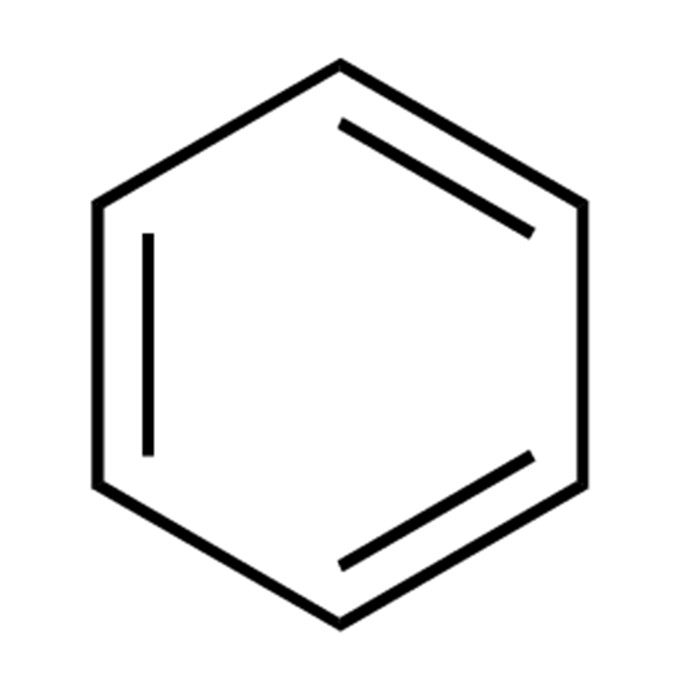
Adsorption has several advantages. It can achieve high - purity separation, and it is relatively energy - efficient compared to distillation. It is also suitable for separating trace amounts of benzene from a mixture. However, the adsorbent needs to be regenerated after use, and the capacity of the adsorbent may decrease over time.
Membrane Separation: Selective Permeation
Membrane separation is a modern technique for separating benzene from other compounds. It uses a membrane that allows only certain molecules (in this case, benzene) to pass through while blocking others. The driving force for the separation can be a pressure difference, a concentration difference, or an electrical potential difference.
There are different types of membranes used for benzene separation, such as polymeric membranes and inorganic membranes. Polymeric membranes are flexible and easy to manufacture, but they may have limited chemical and thermal stability. Inorganic membranes, like ceramic membranes, have high chemical and thermal stability but are more expensive.
Membrane separation has the advantage of being a continuous process with low energy consumption. It can also be easily integrated into existing industrial processes. However, the membranes may become fouled over time, which reduces their separation efficiency.
Applications of Separated Benzene
Once benzene is separated from other compounds, it has a wide range of applications. Benzene is a key raw material in the production of many chemicals. For example, it is used in the production of STYRENE CAS 100 - 42 - 5, which is used to make polystyrene plastics. Benzene is also used in the synthesis of phenol, aniline, and nylon.
In addition, benzene is used as a solvent in some industries. However, due to its toxicity, its use as a solvent has been restricted in many countries.
Conclusion
In conclusion, there are several methods available for separating benzene from other compounds, each with its own advantages and limitations. Distillation is a classic and widely used method, but it has high energy requirements. Extraction offers selective separation at lower temperatures, while adsorption can achieve high - purity separation. Membrane separation is a modern and energy - efficient technique.
As a Benzene CAS 71 - 43 - 2 supplier, I understand the importance of providing high - quality benzene to our customers. By using the appropriate separation methods, we can ensure that our benzene products meet the required purity standards.
If you are interested in purchasing high - quality benzene or have any questions about benzene separation, please feel free to contact us for further discussion and negotiation. We are committed to providing you with the best products and services.
References
[1] Atkins, P. W., & de Paula, J. (2006). Physical Chemistry (8th ed.). Oxford University Press.