


Organic chemicals are all around us, playing crucial roles in various industries. As a supplier of organic chemicals, I've seen firsthand how important it is to be able to detect these substances in the environment. Whether it's for environmental monitoring, industrial safety, or research purposes, detecting organic chemicals accurately is a must. In this blog, I'll share some of the ways we can detect these chemicals in the world around us.
Why Detect Organic Chemicals in the Environment?
Before we dive into the detection methods, let's quickly talk about why it's important. Organic chemicals can come from natural sources like plants and animals, but they're also produced in large quantities by industries. Some of these chemicals can be harmful to the environment and human health. For example, certain pesticides and industrial solvents can contaminate water sources, soil, and air. Detecting these chemicals helps us to assess the environmental impact, enforce regulations, and take necessary actions to protect our planet and ourselves.
Sampling Techniques
The first step in detecting organic chemicals is to collect samples. There are different ways to do this, depending on the type of environment and the chemicals you're looking for.
Air Sampling
When it comes to air, we can use devices like air pumps to draw air through a collection medium. This medium can be a filter or an adsorbent material that traps the organic chemicals. For example, activated charcoal is commonly used to capture volatile organic compounds (VOCs). These samples can then be analyzed back in the lab to determine the types and concentrations of the chemicals present.
Water Sampling
Water sampling is a bit more straightforward in some ways. We can use grab samples, which are single samples taken at a specific time and location. For a more comprehensive view, we might use composite sampling, where multiple samples are mixed together over a period. For example, in a river, we can take samples at different points along the stream and at different depths. These samples can be analyzed for organic chemicals like pesticides, solvents, and petroleum products.
Soil Sampling
Soil sampling involves collecting soil from different depths and locations. We use specialized tools like soil augers to get samples at the right depths. Organic chemicals in the soil can come from agricultural activities, industrial spills, or waste disposal. By analyzing soil samples, we can find out if there are any contaminants and how far they've spread.
Detection Methods
Once we have our samples, it's time to detect the organic chemicals. There are several methods available, each with its own advantages and limitations.
Gas Chromatography (GC)
Gas chromatography is a widely used method for separating and analyzing organic compounds. In GC, the sample is vaporized and then carried through a column by an inert gas. Different compounds in the sample move through the column at different rates, depending on their properties. As they exit the column, they're detected by a detector, which produces a chromatogram. This chromatogram shows the different compounds present in the sample and their relative amounts. GC is great for analyzing volatile and semi - volatile organic compounds. For example, it can be used to detect solvents like Acetonitrile CAS 75 - 05 - 8 in industrial wastewaters.
Liquid Chromatography (LC)
Liquid chromatography is similar to GC, but it uses a liquid mobile phase instead of a gas. This makes it suitable for analyzing non - volatile and thermally unstable compounds. In LC, the sample is dissolved in a liquid and pumped through a column. The different compounds in the sample interact with the column material in different ways, causing them to separate. Like in GC, a detector is used to identify and quantify the compounds. LC is often used in environmental analysis to detect pesticides, pharmaceuticals, and other complex organic compounds.
Mass Spectrometry (MS)
Mass spectrometry is often combined with chromatography methods (GC - MS or LC - MS) to provide more accurate identification of organic compounds. In MS, the compounds are ionized, and the ions are separated based on their mass - to - charge ratio. The resulting mass spectrum provides information about the molecular structure of the compound. This is really useful when you're trying to identify unknown chemicals in an environmental sample. For example, in the case of an industrial spill, MS can help determine exactly what chemicals were released.
Spectroscopy
Spectroscopy methods like infrared (IR) spectroscopy and ultraviolet - visible (UV - Vis) spectroscopy can also be used to detect organic chemicals. IR spectroscopy measures the absorption of infrared light by the sample. Different functional groups in organic compounds absorb infrared light at specific wavelengths, allowing us to identify the types of compounds present. UV - Vis spectroscopy measures the absorption of ultraviolet and visible light. It's useful for detecting compounds that have chromophores, which are groups of atoms that absorb light in the UV - Vis range.
Challenges in Detection
Detecting organic chemicals in the environment isn't always easy. One of the main challenges is the low concentration of these chemicals. In many cases, the chemicals are present in trace amounts, making them difficult to detect. Another challenge is the complexity of environmental samples. These samples can contain a mixture of different chemicals, which can interfere with the detection process. For example, some compounds might have similar properties, making it hard to separate and identify them accurately.
The Role of a Supplier
As a supplier of organic chemicals, we play an important role in the detection process. We need to ensure that the chemicals we supply meet the required quality standards. We also need to provide accurate information about the chemicals, including their chemical composition and potential environmental impacts. This information can be useful for those involved in environmental monitoring and detection.
Conclusion
Detecting organic chemicals in the environment is a complex but essential task. By using a combination of sampling techniques and detection methods, we can get a better understanding of the presence and distribution of these chemicals. Whether you're an environmental scientist, an industry professional, or just someone interested in protecting the environment, knowing how to detect organic chemicals is crucial.
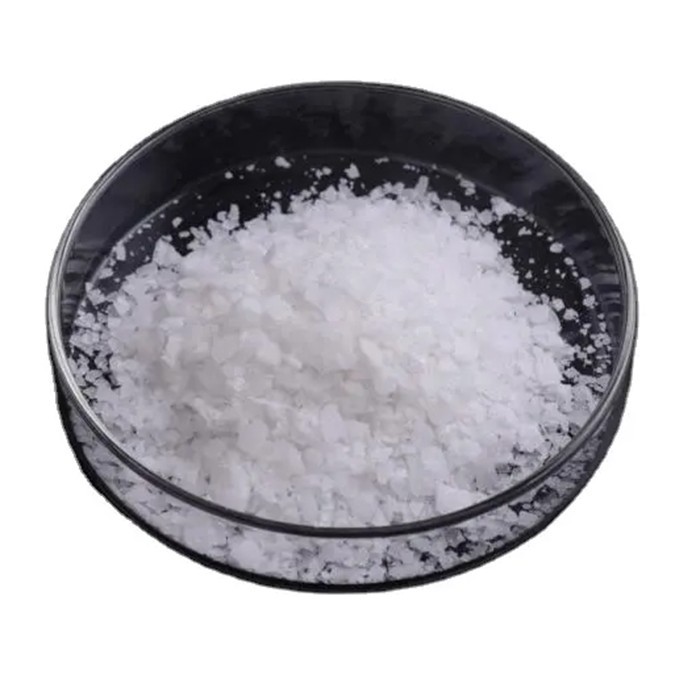

If you're in the market for high - quality organic chemicals like STYRENE CAS 100 - 42 - 5 or Phthalic Anhydride CAS 85 - 44 - 9, and want to learn more about their properties and uses, feel free to reach out for a procurement discussion. Our team is ready to assist you in finding the right solutions for your needs.
References
- Skoog, D. A., West, D. M., Holler, F. J., & Crouch, S. R. (2014). Fundamentals of Analytical Chemistry. Cengage Learning.
- Que Hee, S. S., & Boyle, J. D. (Eds.). (1984). Sampling and Analysis of Environmental Chemicals. ASTM International.