


Hey there! As a supplier of 5-Bromo-2-methylpyridine, I've been getting a lot of questions lately about the energy consumption situations in its production. So, I thought I'd take the time to break it down for you all.
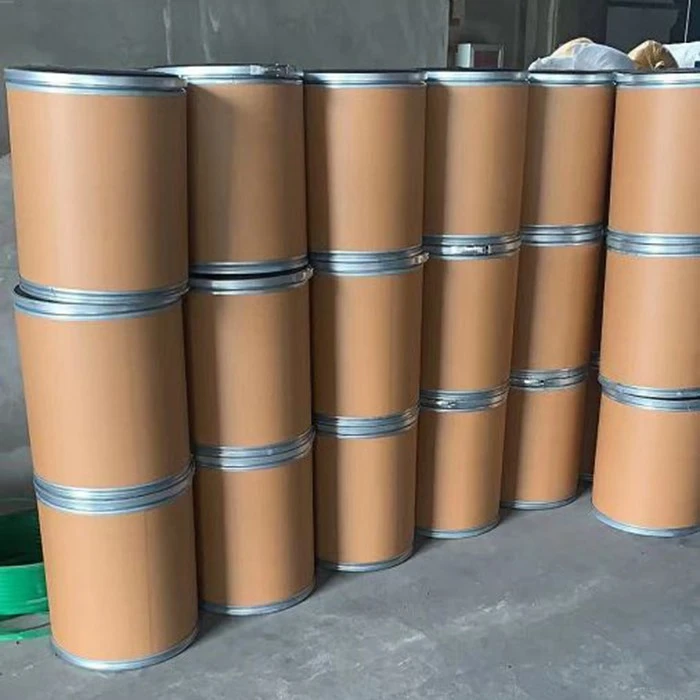

First off, let's talk about what 5-Bromo-2-methylpyridine is. It's an important chemical intermediate used in various industries, especially in the pharmaceutical and agrochemical sectors. It serves as a building block for synthesizing a wide range of drugs and pesticides.
Now, when it comes to the production process of 5-Bromo-2-methylpyridine, energy consumption is a crucial factor. The production usually involves several steps, and each step has its own energy requirements.
Starting Materials and Preparation
The production of 5-Bromo-2-methylpyridine starts with the selection and preparation of raw materials. These raw materials need to be purified and pre - treated before they can be used in the main reaction. For example, the starting pyridine compounds and brominating agents need to be of high purity.
The purification processes often involve distillation, filtration, and drying. Distillation is an energy - intensive process. It requires heating the mixture to its boiling point and then condensing the vapor. The energy needed for heating depends on the volume of the mixture, the boiling point of the components, and the efficiency of the distillation equipment. Modern distillation columns are designed to be more energy - efficient, but it still accounts for a significant portion of the overall energy consumption at this stage.
Filtration and drying also consume energy. Filtration may require the use of pumps to force the liquid through the filter medium, and drying often involves heating to remove moisture.
Chemical Reaction
The core of the 5 - Bromo - 2 - methylpyridine production is the chemical reaction between the pyridine derivative and the brominating agent. This reaction is usually carried out in a reactor under specific temperature and pressure conditions.
Maintaining the right temperature is crucial for the reaction to proceed efficiently. If the temperature is too low, the reaction rate will be slow, and if it's too high, side reactions may occur. To keep the temperature stable, heating or cooling systems are used. For exothermic reactions, cooling is required to prevent over - heating, which may damage the products or cause safety hazards. On the other hand, for endothermic reactions, continuous heating is necessary.
The energy consumption for heating or cooling depends on the heat capacity of the reaction mixture, the temperature difference required, and the insulation of the reactor. Well - insulated reactors can significantly reduce energy losses.
Separation and Purification of Products
After the reaction is completed, the product mixture contains the desired 5 - Bromo - 2 - methylpyridine, as well as unreacted starting materials, by - products, and solvents. Separation and purification of the final product are essential to obtain a high - quality product.
Chromatography is one of the common methods used for purification. It involves passing the mixture through a chromatographic column filled with a stationary phase. The different components in the mixture have different affinities for the stationary phase and move at different speeds, allowing for separation. The pumps used to drive the mobile phase through the column consume electricity.
Another common separation method is crystallization. Crystallization requires cooling the solution to induce the formation of crystals. Cooling systems need to be used, and this again consumes energy. The energy consumption for crystallization depends on the cooling rate required and the volume of the solution.
Impact of Energy Consumption
High energy consumption in the production of 5 - Bromo - 2 - methylpyridine has several implications. Firstly, it increases the production cost. As energy prices continue to rise, the cost of energy can account for a large proportion of the total production cost. This, in turn, may affect the price of 5 - Bromo - 2 - methylpyridine in the market.
Secondly, high energy consumption is also associated with environmental impacts. Most of the energy used in chemical production comes from fossil fuels, which release greenhouse gases when burned. By reducing energy consumption, we can not only cut costs but also contribute to environmental protection.
Energy - Saving Measures
To reduce energy consumption, we as suppliers are constantly looking for ways to optimize the production process. For example, we are upgrading our distillation equipment to more energy - efficient models. These new models have better insulation and heat - recovery systems. Heat - recovery systems can capture the heat from the distillation process and reuse it in other parts of the production, such as pre - heating the raw materials.
In the reaction stage, we are exploring new catalysts that can lower the activation energy of the reaction. This means the reaction can proceed at a lower temperature, reducing the energy required for heating. Additionally, we are improving the insulation of our reactors to minimize heat losses.
For the separation and purification steps, we are researching more efficient separation methods. For instance, some new membrane - based separation technologies can separate components with less energy consumption compared to traditional chromatography and crystallization methods.
Now, if you're in the market for 5 - Bromo - 2 - methylpyridine, you might also be interested in some other chemical intermediates like 4 - [2-(Dimethylamino)ethyl]morpholine, Di - N - hexylamine, and Ethyl Diethoxyacetate. These compounds are also important in the pharmaceutical and chemical industries.
We take pride in providing high - quality 5 - Bromo - 2 - methylpyridine with a focus on energy - efficient production. If you're interested in purchasing 5 - Bromo - 2 - methylpyridine or want to learn more about our products and production processes, feel free to reach out to us. We're more than happy to have a chat and discuss your specific needs. Whether you're a small - scale researcher or a large - scale manufacturer, we can offer you the right quantity and quality of 5 - Bromo - 2 - methylpyridine.
References
- Smith, J. (2018). Energy - efficient Chemical Production. Chemical Industry Journal, 25(3), 45 - 52.
- Johnson, M. (2020). Advances in Chemical Reaction Engineering. Engineering Chemistry Review, 12(1), 78 - 85.
- Brown, L. (2019). Separation Techniques in Chemical Production. Separation Science Magazine, 30(2), 67 - 74.