


Benzene, a fundamental aromatic hydrocarbon, is a key player in the world of organic chemistry. As a supplier of high - quality Benzene CAS 71 - 43 - 2, I have witnessed firsthand the importance of understanding its chemical reactions, especially those with halogens. This blog post aims to delve into the reactions of benzene with halogens, exploring the mechanisms, products, and practical applications.
1. General Overview of Benzene's Reactivity with Halogens
Benzene is a highly stable aromatic compound due to its delocalized π - electron system. This stability makes it less reactive than typical alkenes towards addition reactions. When it comes to reactions with halogens, benzene undergoes substitution reactions rather than addition reactions under normal conditions.
The general reaction of benzene with a halogen (X₂, where X = Cl, Br) can be represented as follows:
C₆H₆ + X₂ → C₆H₅X+ HX
This reaction is a type of electrophilic aromatic substitution (EAS), where the halogen acts as an electrophile and substitutes one of the hydrogen atoms on the benzene ring.
2. Chlorination of Benzene
The chlorination of benzene is an important industrial process. To initiate the reaction, a Lewis acid catalyst such as iron(III) chloride (FeCl₃) or aluminum chloride (AlCl₃) is required.
Mechanism
- Formation of the electrophile:
The Lewis acid catalyst reacts with chlorine gas (Cl₂) to generate a stronger electrophile, the chloronium ion (Cl⁺).
FeCl₃+ Cl₂ → FeCl₄⁻+ Cl⁺ - Electrophilic attack:
The electrophilic chloronium ion (Cl⁺) attacks the benzene ring, forming a resonance - stabilized carbocation intermediate called the arenium ion.
C₆H₆+ Cl⁺ → C₆H₅Cl⁺ - H - Deprotonation:
A base (usually the FeCl₄⁻ ion) abstracts a proton from the arenium ion, restoring the aromaticity of the benzene ring and forming chlorobenzene and regenerating the catalyst.
C₆H₅Cl⁺ - H+ FeCl₄⁻ → C₆H₅Cl + HCl+ FeCl₃
Industrial Applications
Chlorobenzene is an important intermediate in the production of many chemicals. It can be used in the synthesis of Phenol CAS 108 - 95 - 2, which has a wide range of applications in the production of plastics, resins, and pharmaceuticals.
3. Bromination of Benzene
The bromination of benzene is similar to chlorination. A Lewis acid catalyst, typically iron(III) bromide (FeBr₃), is used to activate the bromine molecule.
Mechanism
- Formation of the electrophile:
FeBr₃+ Br₂ → FeBr₄⁻+ Br⁺ - Electrophilic attack:
C₆H₆+ Br⁺ → C₆H₅Br⁺ - H - Deprotonation:
C₆H₅Br⁺ - H+ FeBr₄⁻ → C₆H₅Br + HBr+ FeBr₃
Applications
Bromobenzene is used in the synthesis of various organic compounds, including Grignard reagents. These reagents are widely used in organic synthesis for the formation of carbon - carbon bonds.
4. Iodination of Benzene
Iodination of benzene is more difficult compared to chlorination and bromination because iodine is a weaker electrophile. A strong oxidizing agent such as nitric acid (HNO₃) or hydrogen peroxide (H₂O₂) is often required to generate the iodonium ion (I⁺) in situ.
The reaction can be represented as:
C₆H₆+ I₂+ oxidizing agent → C₆H₅I + HI
Mechanism
The oxidizing agent oxidizes iodine to a more reactive species, which then acts as an electrophile to attack the benzene ring. The detailed mechanism is more complex and involves multiple steps of oxidation and electrophilic attack.
Applications
Iodobenzene is used in cross - coupling reactions, such as the Suzuki - Miyaura reaction and the Heck reaction, which are important methods for the construction of complex organic molecules.
5. Fluorination of Benzene
Fluorination of benzene is extremely difficult and dangerous due to the high reactivity of fluorine. Direct fluorination of benzene with elemental fluorine (F₂) is highly exothermic and can lead to explosive reactions.
Instead, indirect methods are used, such as the Balz - Schiemann reaction. In this reaction, aniline is first diazotized to form a diazonium salt, which is then treated with fluoroboric acid (HBF₄) to form a diazonium fluoroborate salt. Heating this salt leads to the formation of fluorobenzene.

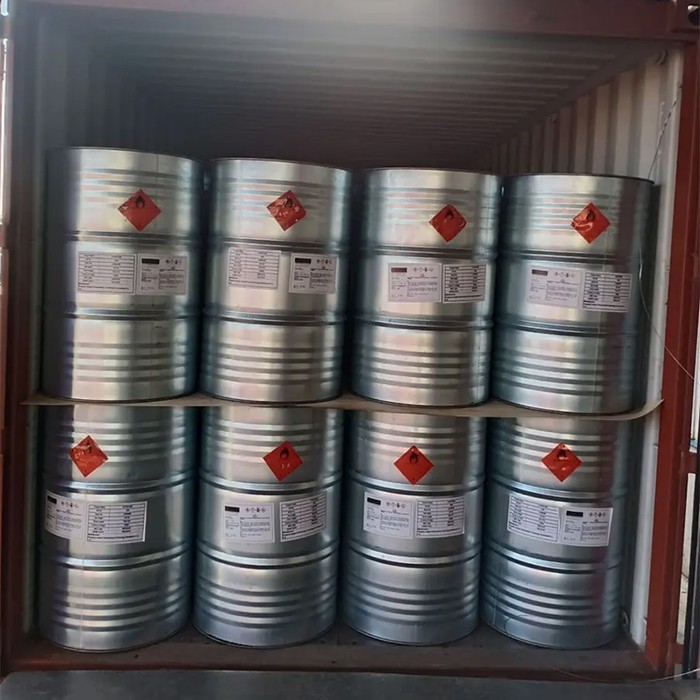
6. Practical Considerations for Suppliers
As a benzene supplier, understanding these reactions is crucial for several reasons. Firstly, it allows us to provide better technical support to our customers. For example, if a customer is interested in producing chlorobenzene, we can offer advice on the appropriate reaction conditions and the quality of benzene required.
Secondly, knowledge of these reactions helps us in quality control. The purity of benzene can significantly affect the outcome of these reactions. Impurities in benzene may react with the halogens or the catalysts, leading to side reactions and lower yields.
7. Market Trends and Applications
The products of benzene - halogen reactions have a wide range of applications in various industries. Chlorobenzene and bromobenzene are important intermediates in the production of pharmaceuticals, agrochemicals, and polymers. For example, STYRENE CAS 100 - 42 - 5, which is used in the production of polystyrene plastics, can be synthesized from benzene - derived intermediates.
The demand for these products is constantly evolving, driven by factors such as technological advancements, environmental regulations, and changes in consumer preferences. As a supplier, we need to stay updated on these trends to meet the changing needs of our customers.
8. Conclusion and Call to Action
In conclusion, the reactions of benzene with halogens are fundamental in organic chemistry and have significant industrial applications. Understanding the mechanisms, products, and practical considerations of these reactions is essential for both chemists and suppliers like us.
If you are involved in the production of chemicals that require benzene or its halogenated derivatives, we are here to provide you with high - quality benzene and technical support. Whether you are a small - scale laboratory or a large - scale industrial manufacturer, we can meet your needs. Contact us to discuss your requirements and start a fruitful business partnership.
References
- Clayden, J., Greeves, N., Warren, S., & Wothers, P. (2012). Organic Chemistry. Oxford University Press.
- March, J. (1992). Advanced Organic Chemistry: Reactions, Mechanisms, and Structure. John Wiley & Sons.
- Carey, F. A., & Sundberg, R. J. (2007). Advanced Organic Chemistry Part A: Structure and Mechanisms. Springer.