


Hey there! As a hydrochloric acid supplier, I've been getting a lot of questions lately about the indicators that can be used with hydrochloric acid in titration. So, I thought I'd put together this blog post to share some insights on this topic.
First off, let's quickly go over what titration is. Titration is a common laboratory technique used to determine the concentration of a substance in a solution. When it comes to using hydrochloric acid in titration, we're usually dealing with acid - base titrations, where hydrochloric acid acts as the acid component.
Phenolphthalein
One of the most well - known indicators for hydrochloric acid titration is phenolphthalein. It's a great choice in certain situations. Phenolphthalein is colorless in acidic solutions and turns pink in basic solutions. When we're titrating hydrochloric acid (an acid) with a strong base like sodium hydroxide, phenolphthalein can be used to signal the endpoint of the titration.
The endpoint is the point at which the reaction between the acid and the base is complete. As we add the base to the hydrochloric acid solution, the pH of the solution gradually increases. When the pH reaches around 8.2 - 10.0 (the range where phenolphthalein changes color), we see the solution turn from colorless to pink. This color change tells us that we've added just enough base to react with all the hydrochloric acid in the solution.
Methyl Orange
Methyl orange is another popular indicator for hydrochloric acid titration. It has a different color - change range compared to phenolphthalein. Methyl orange is red in acidic solutions with a pH less than 3.1. As the pH of the solution increases and reaches between 3.1 and 4.4, it changes color to orange. And in basic solutions with a pH greater than 4.4, it turns yellow.
In a titration of hydrochloric acid with a strong base, if we use methyl orange as the indicator, the solution starts off red. As we add the base, the pH rises, and when it reaches the 3.1 - 4.4 range, we see the color change from red to orange. This indicates that the titration is approaching the endpoint. Methyl orange is often used when we're dealing with titrations where the acid - base reaction involves a strong acid and a weak base.
Bromothymol Blue
Bromothymol blue is yet another option. It's a pH indicator that changes color over a pH range of about 6.0 - 7.6. In acidic solutions with a pH less than 6.0, bromothymol blue is yellow. As the pH increases and enters the 6.0 - 7.6 range, it turns green, and in basic solutions with a pH greater than 7.6, it becomes blue.
In hydrochloric acid titration, if we're looking for a more precise indication around a near - neutral pH, bromothymol blue can be a good choice. For example, in some titrations where we want to ensure that the reaction results in a solution close to neutral pH, bromothymol blue can help us accurately determine the endpoint.
Choosing the Right Indicator
So, how do we decide which indicator to use? Well, it mainly depends on the nature of the acid - base reaction. If we're titrating hydrochloric acid with a strong base like sodium hydroxide, both phenolphthalein and methyl orange can be used, but the choice may depend on the accuracy we need. Phenolphthalein gives a clear color change at a relatively high pH, while methyl orange changes color at a lower pH.
If we're titrating hydrochloric acid with a weak base, methyl orange is usually a better choice because its color - change range is more suitable for the pH at which the reaction between a strong acid and a weak base reaches completion.
It's also important to consider the concentration of the solutions involved. In some cases, the concentration of the hydrochloric acid or the base can affect the sharpness of the color change of the indicator.

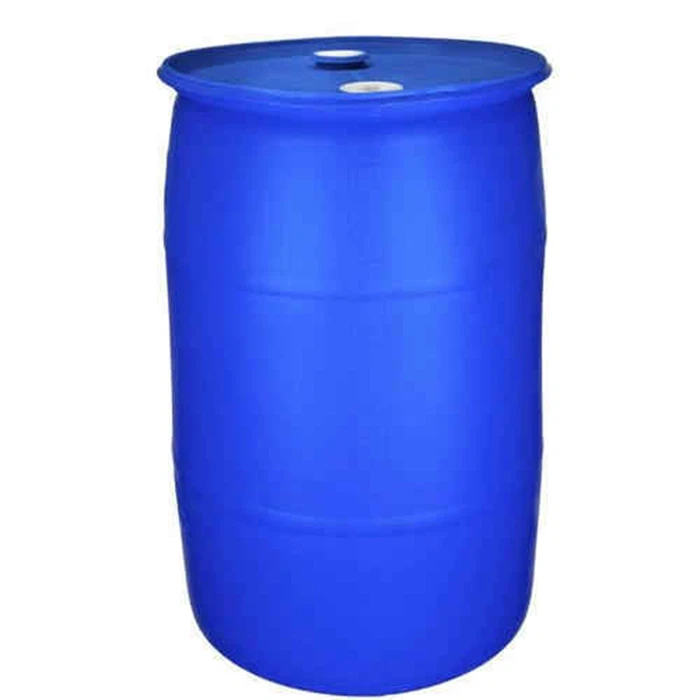
Our Hydrochloric Acid Supply
As a hydrochloric acid supplier, I can assure you that the quality of our hydrochloric acid is top - notch. Whether you're using it for titration in a laboratory setting or for other industrial applications, you can count on us to provide you with a consistent and high - quality product.
We also understand the importance of having the right chemicals for your experiments and processes. That's why we offer a wide range of related chemicals. For example, if you're interested in other basic chemicals, you might want to check out Methyl Acrylate CAS 96 - 33 - 3, Tetrahydrofuran CAS 109 - 99 - 9, or Isobutylene CAS 115 - 11 - 7. These chemicals have various applications in different industries, and we can help you source them.
Let's Connect
If you're in the market for hydrochloric acid or any of the other chemicals we offer, I'd love to hear from you. Whether you have questions about the products, need help with choosing the right indicators for your titration, or just want to discuss your requirements, don't hesitate to reach out. We're here to support you in your chemical - related needs and ensure that you get the best products for your projects.
References
- Harris, D. C. (2010). Quantitative Chemical Analysis. W. H. Freeman and Company.
- Skoog, D. A., West, D. M., & Holler, F. J. (2004). Fundamentals of Analytical Chemistry. Brooks/Cole.